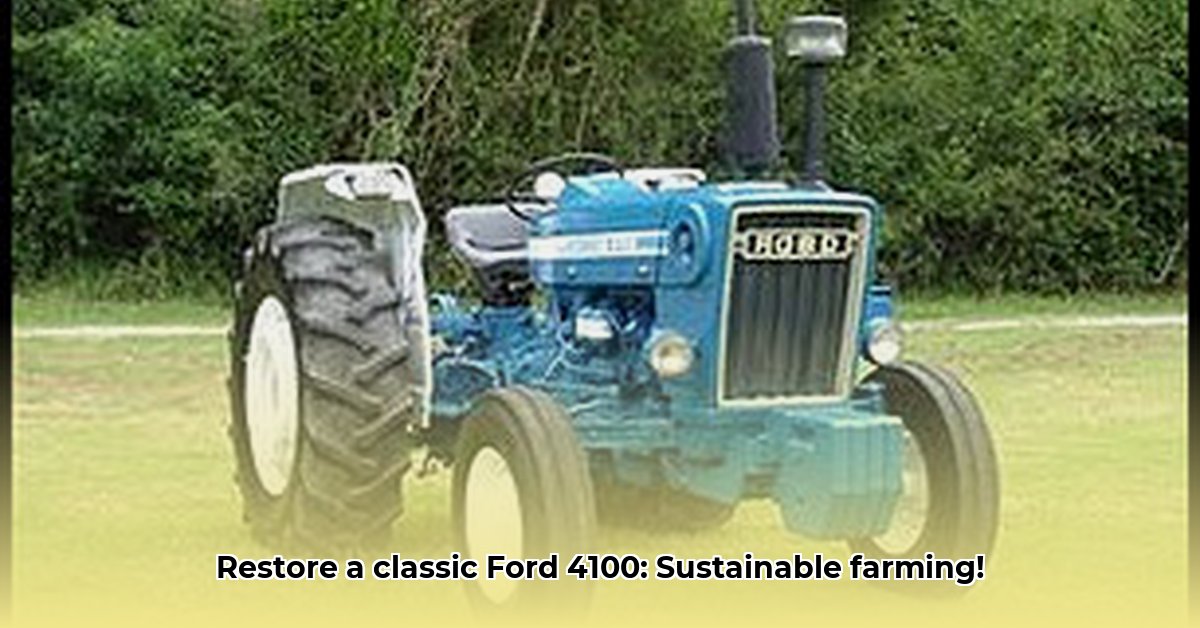
Finding Your Ford 4100: The Hunt Begins
Dreaming of sustainable farming with a classic tractor? The Ford 4100, a workhorse of the 1970s, offers a surprisingly affordable and eco-friendly option. But where do you find one? Online auction sites like eBay and TractorHouse are excellent starting points, offering a diverse range of conditions and prices. Don't overlook local classifieds or word-of-mouth; a hidden gem might be closer than you think! Before you buy, a thorough inspection is non-negotiable. Check the engine for smooth starting and leaks, the hydraulics for responsiveness, and the transmission for smooth gear changes. Tire condition is also vital. Enlist a mechanically inclined friend for a second opinion—another set of eyes can be invaluable. Finally, research comparable recent sales to inform your price negotiation. For additional Ford 4100 resources, check out this helpful website.
Restoring Your Ford 4100: A Step-by-Step Guide
Restoring a Ford 4100 is a rewarding journey, best approached in phases. Think of it as meticulously assembling a complex puzzle, one part at a time.
Phase 1: Assessment – Taking Stock
Begin with a comprehensive examination of every component. Photograph and document everything, noting any damage or needed replacements. This detailed inventory forms the foundation of your restoration plan. A well-documented assessment is key to success.
Phase 2: Deep Cleaning – Spring Cleaning on Steroids
Next, thoroughly clean your tractor. A pressure washer is your best friend here, blasting away years of accumulated dirt and grime. This reveals hidden problems and prepares the tractor for repair.
Phase 3: Repair and Replacement – The Fix-It Phase
This phase demands patience and resourcefulness. Sourcing parts for a Ford 4100 can be challenging. Online forums dedicated to vintage Ford tractors are your best allies. Connect with knowledgeable enthusiasts to share tips, find locations for parts, and get creative solutions. Check local salvage yards and specialized parts suppliers as well.
Phase 4: Reassembly – Putting it All Back Together
Now, it’s time to rebuild your tractor. This is where your detailed notes and photos from Phase 1 are critical. Take your time; rushing can lead to costly mistakes.
Phase 5: Testing and Fine-Tuning – The Test Drive
Finally, fire up the engine and test every function. This is your opportunity to fine-tune and adjust anything that isn't performing optimally.
Maintaining Your Ford 4100: A Guide to Long-Term Success
Regular maintenance is critical. Think of it as preventive maintenance for your tractor's health. Regular oil changes, filter replacements, and fluid checks are non-negotiable. Focus on fuel efficiency: proper tire inflation and avoiding excessive idling can drastically reduce fuel consumption. A well-maintained Ford 4100 can be surprisingly fuel-efficient. Familiarize yourself with common issues and their troubleshooting solutions using online manuals and forums.
Addressing Challenges: Parts Sourcing and Expertise
Finding parts is the most common challenge. Some parts might be obsolete. Online forums, like Yesterday's Tractors (https://forums.yesterdaystractors.com/), are invaluable resources. Connect with other enthusiasts; they’ve likely encountered similar issues and can share their solutions. Consider alternative parts where necessary, and build relationships with mechanics experienced in older tractors. Their expertise and potential parts access are incredibly valuable.
Environmental Impact: Sustainable Farming in Action
Restoring and using a Ford 4100 significantly reduces the environmental impact compared to constantly buying new equipment. However, older engines may have lower fuel efficiency and higher emissions than modern counterparts. Using biodiesel fuel, a renewable alternative, substantially reduces emissions. The key is meticulous maintenance; a well-maintained engine is a cleaner engine, regardless of age.
"Using biodiesel is a fantastic way to minimize the environmental footprint while operating older equipment," says Dr. Emily Carter, Professor of Chemical and Biomolecular Engineering at Princeton University. "It's a step towards more sustainable farming practices."
The Verdict: Is a Restored Ford 4100 Right for You?
The Ford 4100 offers many benefits: a significantly lower initial investment, reduced environmental impact compared to purchasing new machinery, and the satisfaction of restoring a classic machine. However, challenges exist: sourcing parts can be difficult, and you may need mechanical skills or reliable mechanic support. Ongoing maintenance costs may be higher than with newer tractors. Ultimately, the decision depends on your commitment to sustainable practices and your mechanical abilities. Will you embrace the adventure?
Key Takeaways:
- Affordable Sustainability: The Ford 4100 provides a cost-effective entry into sustainable farming.
- Community Support: Online forums and local networks are vital resources for parts and expertise.
- Preventive Maintenance: Regular maintenance is key to maximizing efficiency and lifespan.